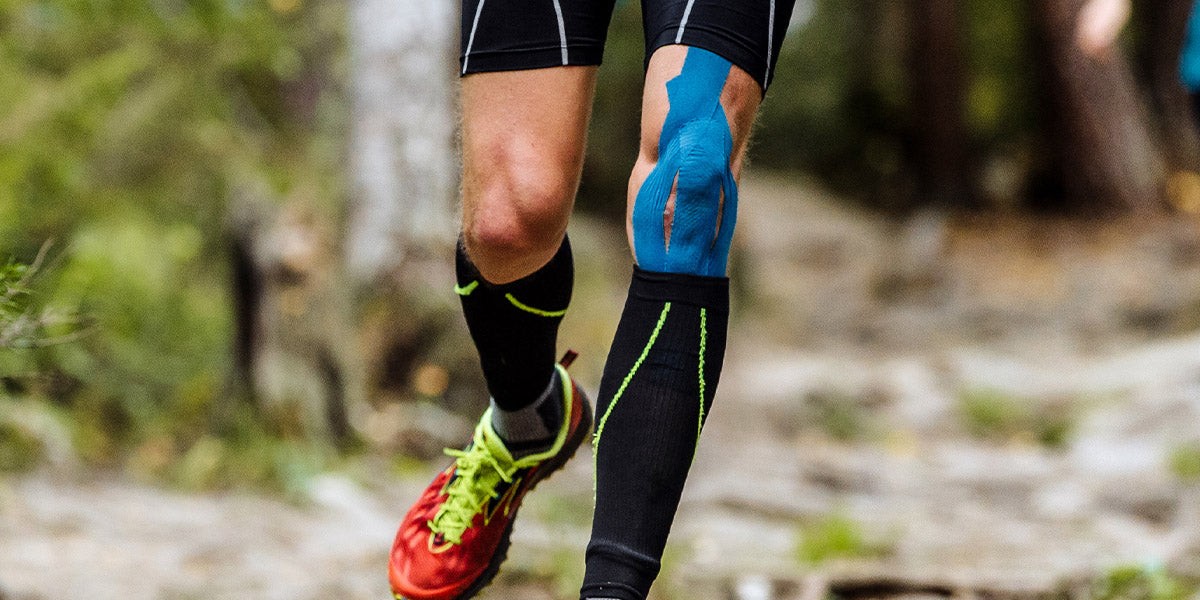
It’s a cold Tuesday morning in February. The Bronte Runners group hasn’t even started their warm-up yet, and I’m already kneeling on the dock, applying kinesiology tape to a club member’s knee. She’s been managing runner’s knee for three weeks — enough rest to take the edge off, but she’s nervous about tonight’s run. A few strips of tape, two minutes of work, and she goes out and runs 8 km without stopping.
That’s the unglamorous origin story of TapeGeeks becoming the official Tape & Recovery Partner of the Mercedes-Benz Oakville Bronte Harbour Classic 5K.
Quick Answer: Kinesiology tape for runners supports muscles and tendons without restricting movement, reduces pain from IT band syndrome, shin splints, plantar fasciitis, and runner’s knee, and extends training tolerance so you complete more sessions. TapeGeeks will have a free taping station at Bronte Harbour Park before the 8:00 AM start on June 21.
What Is TapeGeeks?
TapeGeeks is a Canadian athletic health brand built around kinesiology tape, rigid athletic tape, and the Breathe+ collection for sleep and recovery. Their product line includes kinesiology tape (the colourful elastic tape you see on athletes at every level), rigid athletic tape for harder support, and the Breathe+ collection — kids and adult nasal strips, plus mouth tape designed to improve sleep quality and overnight recovery.
I co-founded TapeGeeks. So yes, I have a bias here. But I also tape Bronte Runners members before group runs because this stuff works, not because I’m trying to move units.
The Products Bronte Runners Actually Use
Kinesiology tape is the workhorse of any runner’s kit. It’s the stretchy, colourful tape designed to move with your body. Unlike rigid athletic tape, which locks a joint in place, kinesiology tape supports the surrounding muscles and tendons without restricting your range of motion. It stays on through sweat, showers, and two-hour training runs.
Rigid athletic tape is what you reach for when you need zero movement — a tweaked ankle the day before a race, a wrist that needs to be strapped firmly before a heavy workout. It’s old-school sports medicine in a roll.
Breathe+ nasal strips are the unexpected favourite. I started wearing them on long runs about a year ago and haven’t stopped. The wider nasal passage means more airflow during hard efforts — the brand claims around 30% more airflow, which lines up with what I notice at tempo pace. Several Bronte Runners members use them on race day now.
Breathe+ mouth tape is for overnight recovery. Nasal breathing during sleep increases oxygen saturation, reduces snoring, and supports the kind of deep rest that actually rebuilds tissue after hard training days. I use it nightly. It’s one of those things that sounds weird until you try it.
Why Kinesiology Tape Matters for 5K Training
Most running injuries are cumulative, not catastrophic. You don’t twist an ankle on a flat trail. You gradually accumulate load on your IT band over eight weeks of training, and one day it just stops cooperating.
Kinesiology tape works by gently lifting the skin away from the underlying tissue. That microscopic decompression reduces pressure on pain receptors and improves lymphatic drainage — which is how the body clears out the waste products that accumulate in overworked tissue. A 2017 systematic review in Physical Therapy in Sport found meaningful reductions in pain with kinesiology taping across multiple lower-limb conditions in runners.
The bigger point is this: kinesiology tape extends training tolerance. It lets you complete runs that would otherwise be cut short by nagging pain, which means you arrive at race day in better shape.
Research published in the British Journal of Sports Medicine by Lopes et al. found running-related injury prevalence rates ranging from 19% to 79% per year among recreational runners — with overuse injuries to the knee, lower leg, and foot accounting for the majority. These are the exact areas kinesiology tape addresses most effectively.
The Five Pre-Race Taping Applications
The five taping applications I do most often before Bronte Runners group runs address the injuries that sideline recreational 5K runners most consistently. Each takes two to five minutes.
IT band syndrome — the most common complaint in recreational runners training for their first 5K. Tape runs from the hip down the outside of the thigh, reducing tension on the iliotibial band where it crosses the knee. Combine with foam rolling for best results.
Shin splints — two vertical strips along the tibialis anterior (front of the shin), applied with mild stretch. Reduces the vibration load during heel strike. Ice after runs still helps; tape helps during them.
Plantar fasciitis — a fan pattern across the arch of the foot, applied first thing in the morning before your first step of the day. Anyone who’s felt that stabbing heel pain on the way to the bathroom knows why this matters.
Runner’s knee (patellofemoral pain) — a decompression technique around the kneecap, designed to reduce the contact pressure between the patella and femur. This is the one I most often apply at the dock before a Tuesday run.
Achilles tendinopathy — tape from the heel up the calf, offloading the tendon during push-off. Essential for anyone increasing mileage quickly, which is exactly what 5K training does to people who haven’t run in years.
If you’re not sure which application applies to your situation, the TapeGeeks YouTube channel has video tutorials for each one. Or just find me at the start line on June 21.
What to Expect at BHC Race Day
TapeGeeks will have a station at the start/finish area at Bronte Harbour Park on race morning. If you’re nursing something and want to get taped up before the gun, show up early — the station will be open before the 8:00 AM start.
Race day taping is quick. Tell us what’s bothering you. We’ll handle it.
We’ll also be at the post-race Father’s Day Waterfront Festival vendor expo if you want to stock up on product or ask questions about adding tape to your regular training routine.
The Training Connection
The kilometres you run between now and June 21 accumulate on your shoes just as much as on your body. When your midsole breaks down — typically somewhere between 500 and 800 km — your joints absorb significantly more impact. That’s when shin splints and knee pain tend to show up.
Our companion app RunMate Pro tracks exactly how many kilometres are on each pair of your shoes. It’s free, it’s on iOS, and it was built for exactly this reason. When your shoe mileage climbs, tape becomes more important — and knowing your numbers helps you manage that proactively. Read more about RunMate Pro →
If you’re building your fitness from scratch, the Bronte Harbour Classic 8-week beginner training plan is a good place to start — and the Oakville Performance Running clinics give you coaching alongside your plan.
Frequently Asked Questions
Does kinesiology tape actually work for running?
The evidence is mixed, which I’ll admit upfront. Kinesiology tape is not a cure for anything, and it won’t fix a structural problem. But multiple peer-reviewed studies show it reduces pain and improves proprioception in common running injuries including IT band syndrome, plantar fasciitis, and patellofemoral pain. In my experience taping Bronte Runners members over several years, athletes who tape consistently complete more training sessions with less pain-related interruption. That’s the practical case.
When should I start taping during 5K training?
You don’t need to tape proactively if you’re not having issues. Start using kinesiology tape when you first notice persistent soreness in a specific spot — a nagging shin, a tight IT band, an aching heel. The earlier you address it with tape and modified training, the less likely it becomes a full injury. Don’t wait until you’re limping before you reach for it.
Can I apply kinesiology tape myself?
Yes, for most applications. The key is skin prep (clean and dry), no stretch on the anchor ends of the tape, and applying at around 25–50% stretch through the middle of the strip. TapeGeeks tape has printed application guides on the packaging, and there are clear video tutorials online for every common running application. More complex patella decompression techniques are easier with a partner, but shin, calf, and arch taping are all very manageable solo.
What TapeGeeks products should I use for race day?
For race day, I’d recommend: kinesiology tape for any area that’s been bothering you during training (apply the night before or race morning), a Breathe+ nasal strip for the race itself if you want the airflow advantage during hard effort, and Breathe+ mouth tape the night before to get the best possible sleep before a 5:30 AM alarm. The rigid athletic tape stays in the bag unless you have a specific joint that needs strapping.
TapeGeeks will be on the course on June 21. We’ll take care of you before the gun.
Ready to run? Register for the Mercedes-Benz Oakville Bronte Harbour Classic 5K →