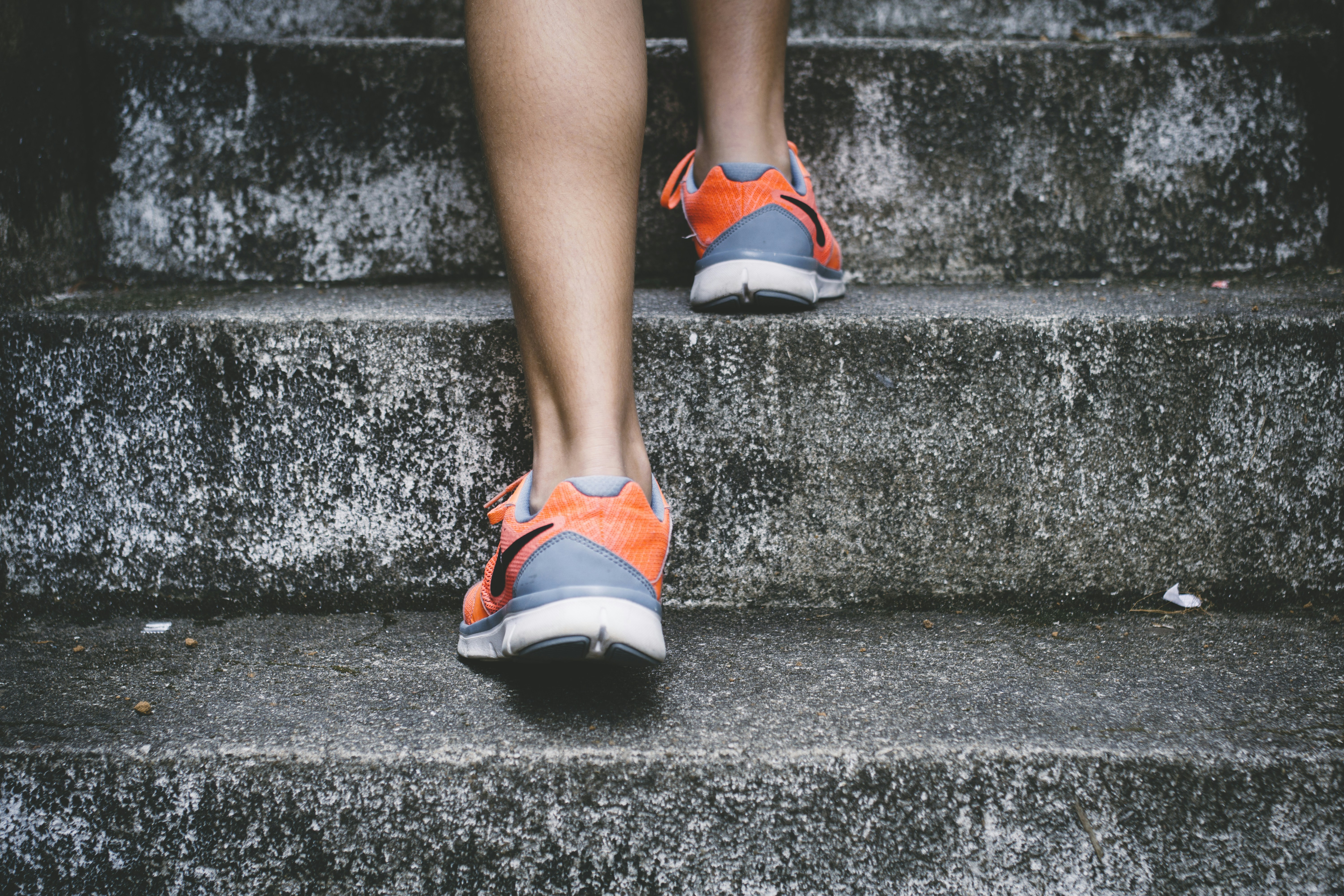
Quick Answer: You can train for a 5K in 8 weeks starting from zero running experience. This plan uses 3 sessions per week and builds from walk/run intervals to covering the full 5 km. Walk breaks are built in — finishing is the only goal that matters on day one.
Yes, 8 Weeks Is Enough
Let’s get straight to it. You can go from zero running experience to finishing a 5K in 8 weeks. Not “maybe.” Not “if you’re already fit.” Eight weeks of consistent, low-pressure training will get you across a finish line. We’ve seen it happen hundreds of times.
This isn’t a plan designed to make you fast. It’s designed to get you to the start line healthy, confident, and ready to finish. If you end up running the whole thing, great. If you walk half of it, also great. Finishing is finishing.
Our race team at the Bronte Harbour Classic 5K includes Charles Sathmary, a former elite Canadian distance runner who has run a 2:13 marathon and a sub-4 minute mile. It also includes Greg Pace, who has been directing road races for over 30 years, including Burlington’s Moon in June Road Race. Between them, they’ve watched thousands of first-time runners go from “I can’t run for 2 minutes” to crossing a finish line with a medal around their neck.
This plan is built on what they’ve learned works. Not what looks good on paper.
✅ Key Takeaway
8 weeks of consistent, low-pressure training is enough to take most people from zero running experience to a 5K finish line. The goal is finishing — not speed.
How Long Does It Take to Train for a 5K From Scratch?
Most beginner 5K training plans run between 6 and 12 weeks. Eight weeks is the sweet spot for people who are reasonably active but don’t currently run. If you walk regularly, take the stairs, or do any kind of exercise a few times a week, 8 weeks is plenty.
If you’re completely sedentary and haven’t exercised in years, consider starting this plan 10-12 weeks before race day. Just repeat Weeks 1 and 2 an extra time before moving on. There’s no prize for rushing.
The Bronte Harbour Classic 5K is on June 21, 2026 --- Father’s Day. Count 8 weeks back and your training start date is April 27. Mark it on your calendar.
📊 By the Numbers
Most first-time 5K runners finish between 30 and 40 minutes — a pace of roughly 6:00 to 8:00 per kilometre. A 35-minute finish (7:00/km) is a perfectly solid first 5K result.
Before You Lace Up: The Non-Negotiables
Get proper running shoes
This is the one thing you should not cheap out on. Go to a running specialty store — not a big box retailer — and get fitted. Running Room and similar running specialty stores have staff who will watch you walk and recommend shoes based on your foot shape and gait. Expect to spend $140-$180 CAD.
Our official shoe sponsor ON Running makes excellent cushioned road shoes that work well for beginners. But the best shoe is the one that fits your foot. Don’t buy shoes because they look good on Instagram.
⚠️ Important
Never run in new shoes on race day. Buy your shoes at least 3-4 weeks before the race and break them in during training. Blisters from new shoes have ended many a first-race experience.
Pick three days a week
Tuesday, Thursday, Saturday works well. Monday, Wednesday, Saturday works too. It doesn’t matter which days you pick. What matters is spacing them out so you’re never running two days in a row during the first four weeks. Your body needs time between sessions to adapt.
Get a simple running app
You need a way to time your run/walk intervals. A free app like the timer on your phone works fine. If you want something fancier, our RunMate Pro app tracks your training runs by route, logs your total weekly mileage, and monitors how many kilometres you’ve put on each pair of shoes — so you know exactly when your training sneakers are worn out before race day. It’s free on iOS and built by co-race director Greg Kowalczyk. A kitchen timer works just as well for the interval workouts in Weeks 1–4, but RunMate is genuinely useful for the longer building runs in Weeks 5–8 when tracking actual distance starts to matter.
💡 Pro Tip
Put your three weekly training days in your calendar right now, before you start. Treat them like appointments you can't cancel. Consistency beats intensity every time for beginner runners.
🏃 Don't Train Alone
The Bronte Runners Club runs Wednesday evenings and weekends — right on the Bronte Harbour waterfront. Nearly 700 members, all paces, free to join. Read how to train with the group.
The 8-Week Couch to 5K Training Plan
Here’s the week-by-week breakdown. Every session starts with a 5-minute brisk walk to warm up and ends with a 5-minute easy walk to cool down. Those warm-up and cool-down walks are not optional --- they matter.
Week 1: Just Start
| Day | Workout | Total Time |
|---|---|---|
| Day 1 | Alternate 60 seconds running / 90 seconds walking. Repeat 8 times. | 25 min |
| Day 2 | Rest or 20-minute brisk walk | --- |
| Day 3 | Alternate 60 seconds running / 90 seconds walking. Repeat 8 times. | 25 min |
| Day 4 | Rest | --- |
| Day 5 | Alternate 60 seconds running / 2 minutes walking. Repeat 7 times. | 26 min |
| Day 6 | 25-minute brisk walk | 25 min |
| Day 7 | Rest | --- |
💡 Pro Tip
The running portions should feel easy. If you're gasping for air, slow down. Use the talk test: you should be able to say a full sentence out loud while running. If you can't, you're going too fast.
Week 2: Build the Habit
| Day | Workout | Total Time |
|---|---|---|
| Day 1 | Alternate 90 seconds running / 90 seconds walking. Repeat 8 times. | 29 min |
| Day 2 | Rest or 20-minute brisk walk | --- |
| Day 3 | Alternate 90 seconds running / 90 seconds walking. Repeat 8 times. | 29 min |
| Day 4 | Rest | --- |
| Day 5 | Alternate 2 minutes running / 1 minute walking. Repeat 7 times. | 26 min |
| Day 6 | 30-minute brisk walk | 30 min |
| Day 7 | Rest | --- |
What “rest” actually means: Rest doesn’t mean lie on the couch all day (though that’s fine too). It means no running. Walking, stretching, light yoga --- all good on rest days.
Week 3: Stretch the Run Intervals
| Day | Workout | Total Time |
|---|---|---|
| Day 1 | Alternate 2 minutes running / 1 minute walking. Repeat 8 times. | 29 min |
| Day 2 | Rest or 25-minute walk | --- |
| Day 3 | Alternate 3 minutes running / 1 minute walking. Repeat 6 times. | 29 min |
| Day 4 | Rest | --- |
| Day 5 | Alternate 2 minutes running / 1 minute walking. Repeat 8 times. | 29 min |
| Day 6 | 30-minute brisk walk | 30 min |
| Day 7 | Rest | --- |
Week 4: The First Breakthrough
| Day | Workout | Total Time |
|---|---|---|
| Day 1 | Alternate 3 minutes running / 1 minute walking. Repeat 7 times. | 33 min |
| Day 2 | Rest or 20-minute walk | --- |
| Day 3 | Run 5 minutes, walk 2 minutes. Repeat 4 times. | 33 min |
| Day 4 | Rest | --- |
| Day 5 | Alternate 3 minutes running / 1 minute walking. Repeat 7 times. | 33 min |
| Day 6 | 30-35 minute brisk walk | 35 min |
| Day 7 | Rest | --- |
✅ Key Takeaway
This is the week it starts to click. Around Week 4, most beginners notice that running for 3-5 minutes feels... normal. Not easy, exactly, but manageable. That 5-minute run in the middle of the week is a big deal. Celebrate it.
Week 5: Building Real Fitness
| Day | Workout | Total Time |
|---|---|---|
| Day 1 | Run 5 minutes, walk 2 minutes. Repeat 4 times. | 33 min |
| Day 2 | Rest or 25-minute walk | --- |
| Day 3 | Run 8 minutes, walk 2 minutes. Repeat 3 times. | 35 min |
| Day 4 | Rest | --- |
| Day 5 | Run 5 minutes, walk 1 minute. Repeat 5 times. | 35 min |
| Day 6 | 35-minute brisk walk | 35 min |
| Day 7 | Rest | --- |
Week 6: You’re a Runner Now
| Day | Workout | Total Time |
|---|---|---|
| Day 1 | Run 8 minutes, walk 2 minutes. Repeat 3 times. | 35 min |
| Day 2 | Rest or 25-minute walk | --- |
| Day 3 | Run 12 minutes, walk 2 minutes. Repeat 2 times, then run 5 minutes. | 35 min |
| Day 4 | Rest | --- |
| Day 5 | Run 10 minutes, walk 1 minute. Repeat 3 times. | 38 min |
| Day 6 | 30-minute walk | 30 min |
| Day 7 | Rest | --- |
"By Week 6, you've already done the hardest part. The hardest part of running is not the running --- it's getting out the door consistently for the first month. If you're here at Week 6, you've proven you can do the work. The race is just the victory lap."
Week 7: The Dress Rehearsal
| Day | Workout | Total Time |
|---|---|---|
| Day 1 | Run 15 minutes, walk 1 minute, run 10 minutes. | 31 min |
| Day 2 | Rest | --- |
| Day 3 | Run 20 minutes straight at a comfortable pace. | 25 min |
| Day 4 | Rest or easy 15-minute walk | --- |
| Day 5 | Run 4 km at your comfortable pace (with walk breaks if needed). | 30-40 min |
| Day 6 | 20-minute easy walk | 20 min |
| Day 7 | Rest | --- |
✅ Key Takeaway
That 4 km run on Day 5 is your confidence builder. If you can cover 4 km, you can cover 5 km on race day. Adrenaline, crowd energy, and the sheer momentum of having other runners around you will carry you that extra kilometre.
Week 8: Race Week Taper
| Day | Workout | Total Time |
|---|---|---|
| Monday | Easy 15-minute jog. Keep it relaxed. | 20 min |
| Tuesday | Rest or light stretching | --- |
| Wednesday | Easy 10-minute jog with 3-4 short pickups (15-second bursts at a slightly faster pace). | 15 min |
| Thursday | Rest | --- |
| Friday | Rest. Lay out your race outfit. Check the parking guide. | --- |
| Saturday | Rest. Review the race day checklist and the course map. Light walking is fine. | --- |
| Sunday, June 21 | RACE DAY. You earned this. | --- |
⚠️ Important
Do not try to "squeeze in one more big run" during race week. This is the most common beginner mistake. The fitness gains from training take 10-14 days to fully show up. Nothing you do in the last week will make you fitter — but a hard run on Wednesday could leave you tired and sore on Sunday. Trust the taper.
What Pace Should a Beginner Aim For?
Forget pace. Seriously.
For your first 5K, the only goal should be finishing. But if you want a rough benchmark: most first-time 5K runners finish somewhere between 30 and 40 minutes. That’s a pace of roughly 6:00 to 8:00 per kilometre. See our average 5K time guide for a full breakdown by age and fitness level.
A 35-minute finish (7:00/km) is a perfectly solid first 5K. Walking portions of the race will put you closer to 40-45 minutes, and that’s completely fine. The Bronte Harbour Classic course is flat, paved, and runs along the Oakville waterfront --- there are no hills to slow you down.
"I've been directing races for over 30 years. The runners I remember most aren't the ones who won. They're the ones who finished their first race with tears in their eyes because they didn't think they could do it. Nobody asks what your time was. They ask if you finished."
Can I Walk During a 5K?
Yes. Full stop.
Walk breaks are not cheating. The run/walk method was popularized by Olympic marathon coach Jeff Galloway, and plenty of experienced runners use it in every single race. At any 5K, you will see people walking. At the Bronte Harbour Classic, we welcome walkers with the same enthusiasm as runners.
Here’s a practical race day walk strategy:
- Run for 4-5 minutes, walk for 60 seconds
- Repeat until you finish
- The short walk breaks keep your heart rate manageable
- This often results in a faster overall time than trying to run the whole thing and bonking at kilometre 3
💡 Pro Tip
Practice the run/walk strategy during your Week 6 and Week 7 training runs so it feels natural on race day. Decide your intervals in advance — don't improvise them mid-race.
How to Avoid Injury During Training
Most beginner running injuries come from doing too much, too fast. This plan is designed to increase your workload gradually, but here are the specific things to watch for:
Shin splints are the most common beginner complaint. If your shins ache after a run, ice them for 15 minutes and make sure your next run is easier. Running on softer surfaces (grass, crushed gravel trails) for one of your weekly sessions can help. Kinesiology tape along the shin can provide support during runs — TapeGeeks kinesiology tape works well for this.
Knee pain on the outside of the knee is often IT band tightness. Foam rolling the outside of your thigh for 2-3 minutes after every run is the best prevention.
Blisters mean your shoes don’t fit right or your socks are wrong. Get proper moisture-wicking running socks. Cotton socks are a blister factory.
📊 By the Numbers
The 10% rule: don't increase your total weekly running time by more than 10% from one week to the next. This plan follows that rule exactly — stick to it as written and you dramatically reduce your injury risk.
Stretch after you run, not before. A 5-minute warm-up walk is better pre-run than static stretching. Save the stretching for after your session when your muscles are warm. Focus on calves, hamstrings, quads, and hip flexors. Hold each stretch for 20-30 seconds.
What Should I Eat Before a 5K?
Race morning nutrition doesn’t need to be complicated. For a detailed breakdown, see our complete race morning nutrition guide. Eat something light 90 minutes to 2 hours before the race. Good options:
- A banana and a piece of toast with peanut butter
- A small bowl of oatmeal with berries
- A plain bagel with a thin layer of cream cheese
- A granola bar and a banana
Avoid anything high in fibre, fat, or dairy on race morning. Your stomach will thank you.
⚠️ Important
Hydration matters more than food. Drink water normally in the days leading up to the race. Don't chug a litre of water 30 minutes before the start — that leads to sloshing and bathroom stops. Sip water as you normally would. The Bronte Harbour Classic 5K has a water station on the course sponsored by Natrilyte, so you'll have access to hydration during the race.
Practice your race morning meal during training. Whatever you plan to eat before the race, eat the same thing before one of your Week 6 or Week 7 training runs. Never try something new on race day.
Race Day Tips for First-Timers
Arrive early. Get to Bronte Harbour Park at least 45 minutes before the 8:00 AM start. You’ll need time to park, pick up your bib, use the washroom, and warm up. Check our parking guide before race morning so you know exactly where to go.
Line up near the back. Don’t stand at the front of the starting corral. The front is for experienced runners chasing fast times. Starting near the back means you won’t feel pressure to keep up with faster runners and you’ll naturally pass people as the race goes on, which feels fantastic.
Start slower than you think you should. The first kilometre is where 90% of beginners make their biggest mistake:
- The adrenaline hits, the crowd is cheering, and suddenly you’re running 30 seconds per kilometre faster than anything you did in training
- That pace catches up to you at kilometre 3, and the last 2 km become miserable
- Start easy — start embarrassingly easy
- You can always speed up in the final kilometre
Use the course to your advantage. The Bronte Harbour waterfront course is flat and scenic. Look up. Enjoy the lake views. Take in the atmosphere. This isn’t a treadmill. You’re running along one of the prettiest stretches of Lake Ontario shoreline.
Smile when you cross the finish line. Someone will be taking photos. You’ll want that picture. Trust us.
✅ Key Takeaway
After you finish, grab your finisher medal, stretch, refuel, and enjoy the post-race festival. There will be live music, food vendors, kids activities, and a community celebration that runs all day.
Join the Community
Training alone is fine. Training with a group is better. The Bronte Runners Club meets regularly in the Bronte area and welcomes runners of every speed, including people who’ve never run before. It’s one of the best ways to stay accountable, and you’ll get to run parts of the actual race course before June 21.
Already registered? Check the FAQ page for answers about race day logistics, timing chips, and post-race celebrations.
Haven’t signed up yet? Register for the Bronte Harbour Classic 5K and give yourself a deadline worth training for. There’s nothing like having a race on the calendar to keep you lacing up three times a week.
Frequently Asked Questions
Is 8 weeks enough time to train for a 5K?
Yes, for most people. If you’re reasonably active (walking regularly, taking stairs, doing some form of exercise), 8 weeks gives you enough time to build from walk/run intervals to covering 5 km. If you’ve been completely sedentary, add 2-4 extra weeks by repeating the early weeks of the plan.
What if I can’t complete a workout as written?
Repeat the week. There’s no shame in doing Week 3 twice before moving to Week 4. The plan is a guide, not a contract. Listen to your body. Progression isn’t always linear --- some weeks you’ll feel great, others you’ll feel flat. Both are normal.
Can I run a 5K without any training?
Technically, most healthy adults can walk or shuffle through 5 km. But showing up without training usually means a rough experience --- you’ll be sore for days and might associate running with misery. Even 4-5 weeks of light preparation makes the experience dramatically more enjoyable.
What should I wear on race day?
Wear whatever you’ve been training in. Race day is not the day to debut new shoes, new shorts, or a new sports bra. Everything should be tested and comfortable. Dress for 10 degrees warmer than the actual temperature --- you’ll heat up quickly once you start running. Check our race day checklist for the complete rundown.
Do I need to carb-load the night before?
No. Carb-loading is for marathons and half-marathons, not 5Ks. Eat a normal, balanced dinner the night before. Pasta is fine, but so is chicken and rice or a sandwich. Don’t overeat. A normal meal is all you need.
How do I know if I’m running too fast during training?
Use the talk test. If you can speak a full sentence out loud without gasping, you’re at the right pace. If you can only get out two or three words before needing a breath, slow down. Most beginners run their easy sessions too fast. Slow, steady effort builds endurance. Speed comes later.
What happens after I finish my first 5K?
You’ll probably want to do another one. That’s what happens to most people. And after a 5K, a 10K doesn’t seem so impossible anymore. But for now, focus on June 21. One finish line at a time.
Ready to turn 8 weeks of training into a finisher medal? Register for the Bronte Harbour Classic 5K --- a flat, fast, beautiful waterfront course in Oakville on Father’s Day, June 21, 2026.